

Meet Jordan Bower
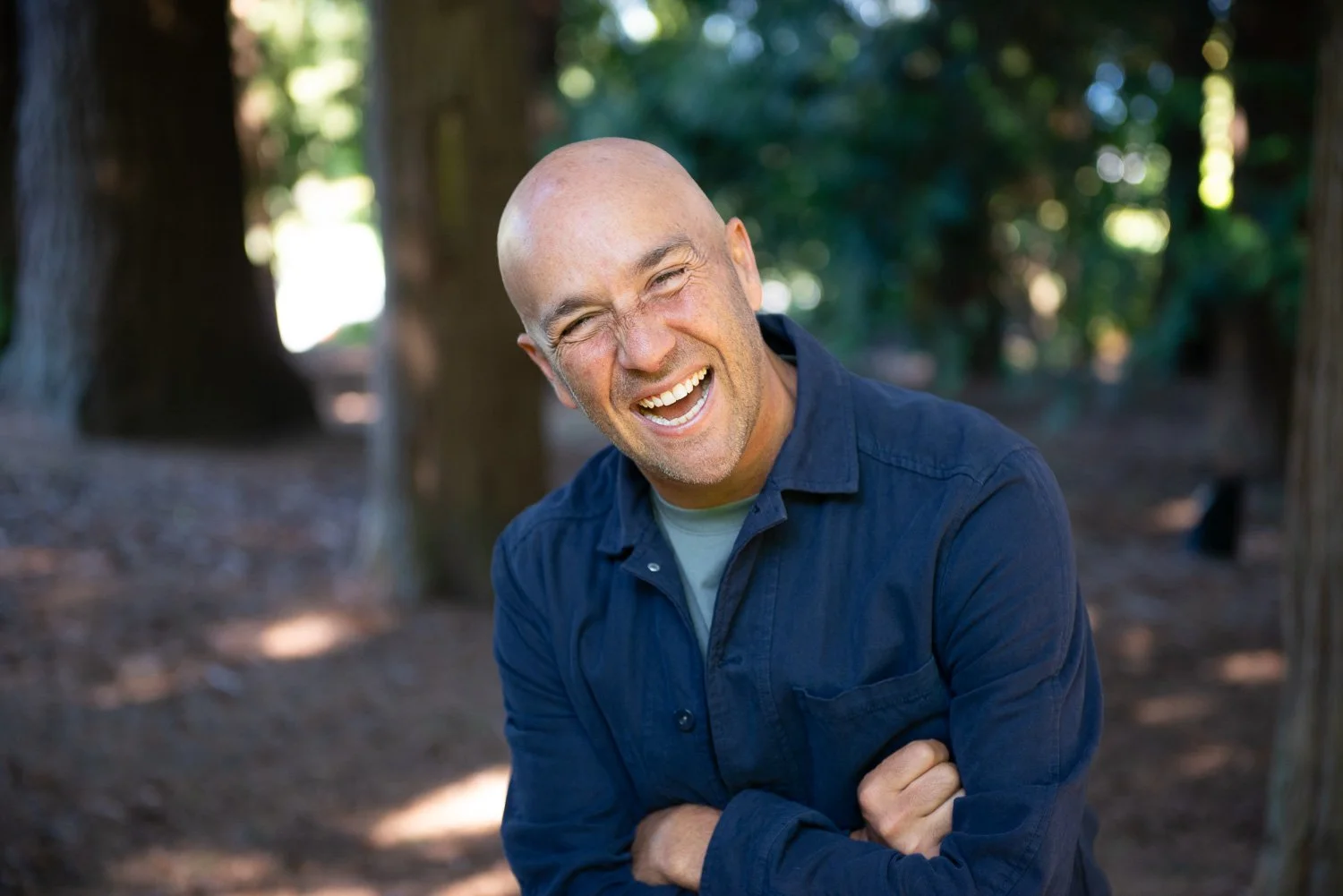
If I had to pick a single word to describe myself, I would probably protest because I love words and language. My greatest challenge as a writer is brevity. As a human, I don’t fit neatly into a box.
Professionally, I have purposefully cultivated a career that has required me to embrace curiosity, continuous growth, and exploration far beyond the conventional roles and expectations in business. I have been hired as a consultant, a coach, a facilitator, and a speaker, and for expertise that includes—deep breath—storytelling, creative thinking, emotional intelligence, resilience, communications strategy, workplace design, accountability partner, transformation guidance, organizational design, and culture strategist.
When people ask me what I do, I tell them that the honest answer is I answer a little differently every time. They often look at me funny, but that’s the truth.
One word I use often is multi-hyphenate. It’s a word I borrowed from the creative arts. You know how in Hollywood someone can be an actor-director-producer-musician-business person, like, say Lady Gaga or LeBron James? My highest aspiration is to also be one of these present day Renaissance people. My professional work is all about the boundaries between things, and what happens when you stand on both sides of the line.
If I were to be poetic, I might gravitate towards words like edge walker or change agent or the word I love best: storyteller. When I first started selling storytelling services, about 15 years ago, the people I met looked at me like I was nuts. I could see the question forming behind their furrowed brow: but where do you fit inside an org chart? The simple answer is: I don’t know.
I have spent my entire career redefining myself, and I plan to do so for as long as I’m working.
Get Practical
Ok, ok, Jordan. But what do you do? I’ll answer that question by telling you a bit about how I got here.
Career-wise, my professional journey began when I attended business school up here in Canada. (I live in Vancouver.) I attended the Richard Ivey School of Business, which is one of the top ranked business programs in the world. But before I matriculated into business, I dawdled for a couple years studying philosophy. Needless to say, all that liberal arts training precluded me from becoming an investment banker. It catalyzed the journey I’m still on today: asking questions, exploring the edges of things, dreaming about what might be possible.
When I graduated, I began working at a luxury travel company called Butterfield & Robinson, which is based in Toronto. I got hired to do a specific job—operations manager—and within 3 months, I was promoted, because it was obvious to everyone that I couldn’t sit still. My role became Special Projects. Basically, that meant that I floated around the office talking to people in different departments and assessing where they were having communications breakdowns between divisions. So when sales wasn’t talking to marketing, or when finance was griping about ops, I was the one who listened and tried to diagnose what was really going on.
Functionally, I was acting like an in-house consultant. Though I was young, I started to understand the importance of what I was good at, and also that it was a rare skill that many people didn’t understand—let alone value. I began to wonder where I fit, and about my future. And I began to think a lot about how the world was changing so quickly.
Turns out that this was prototypical behaviour for an early millennial. To think this is way back in the mid-2000s! With itchy feet and a little bit of money saved up, I decided to quit my job and go traveling. In retrospect, this was one of the most important decisions of my life. At first, I imagined that I would be on the road for a few months. In the end, I traveled for most of the next six years. I focused mostly on countries in South Asia, like India and Nepal, partially because it was so economical to be a backpacker. I could stretch out my meagre savings, and the little bits of money I earned when I came home would help to sustain me for a few more months out there in the world.
There was no denying the great privileges that afforded this journey. More importantly for me, at the time, was that I could stop asking myself the big questions—like what do you do?—and focus instead on what interested me. The short answer was storytelling. I threw myself wholeheartedly into learning to be a storyteller—specifically, a photographer. During my travels, I always had a camera around my neck, and I was always (trying) to make art out of what I discovered. If it had been just a few years later, I would have probably become an influencer. But this was pre-smartphone, and the very idea of being an influencer didn’t yet exist. Instead, I saw myself as an artist-in-training, with enough freedom to focus on my work—and not how the hell I was going to support myself when I inevitably went back home.
At one point, I submitted an application and was accepted to the Parsons School of Design in Manhattan for a Master’s. That might have professionalized my life. But then, another opportunity presented itself.
Walking Across America, From Canada to Mexico
Okay, this is a whole story in itself. Basically, when I was about 29, in the midst of this extended rumspringa of endless traveling, I had a girlfriend who came up with the idea that we were going to walk down the West Coast of the USA together. Then, the relationship fell apart—and in the heartbroken aftermath, I did what I thought any artist-in-training would do: I threw my heart and soul out for the world to see. I ended up posting a video on a nascent website called Kickstarter, telling the world my plan to walk the West Coast, and hoping that people would chip in a little cash.
Secretly-slash-not-so-secretly, I hoped that my public announcement would have an impact on my ex, John Cusack in Say Anything style. I hoped that she would be so taken by my love that she would join me on the walk into our happily-ever-after. But that’s not what happened. I ended up walking the length of the West Coast on my own, camera around my neck, grieving my own massive fuck-up.
There are so many things I could say about this journey. I carried my gear on my back, slept many nights in a tent, and many more on the couches of the people I met along the way. These connections with strangers humbled me; they taught me about empathy and compassion and trust, and they helped me put my own personal melodrama into more mature perspective. Among other things, I realized that my life had been spent avoiding responsibility, trying to defend myself against the big bad world making its mark on me, rather than thinking about how I could make my own mark on the world. Through all that time and contemplation, I realized that I wanted more out of life. I wanted to make an impact, though I didn’t yet know how.
By the end of the journey, I felt as if I had become someone different. Not just healed, but transformed. I was finally ready to set off on a new, more adult journey.
Back to the Practical!
By the time I came home, I was already thinking about myself as a storyteller. I moved to a small city off the Canadian West Coast—Victoria—and began to explore the idea of selling my storytelling services to small businesses. The most obvious overlap between my skills and potential clients needs was marketing. Victoria is a tourist town; I went through the online listings of all the tourist services, like B&Bs and whale watching tours, and sent a message to everyone who had a bad website asking if they needed some marketing help. This was around 2012/2013, when social media and smartphones were becoming a definite thing.
I was able to acquire some clients who hired me to build their websites. As soon as I deposited their checks, I set out to teach myself how to build a website! I had no idea what I was doing. But when I attended our first meeting, I started to ask some simple questions like: what do you want to say on your homepage? I realized that my clients didn’t really know either. I realized that they weren’t just confused about branding. They were confused about their own deeper vision about where the world was heading, and how they fit into it. As a storyteller, I knew how to help with that—that was exactly what I had learned on my own journey.
So gradually, I began experimenting with how to help clients do that. Eventually, I designed a “storytelling workshop” which was all about finding the story first before telling it. I built my own website, and I put it online. Slowly, I started to get some clients.
My big break came in 2015. Somehow, out of the blue, I got a message from a woman in New York who worked for a thing called the Future of Story Telling Festival. It took me a while to reply, because I was convinced this was spam. She explained that, no, this was the real deal. They were having a big event on Staten Island, and there were many other speakers exploring how storytelling was being redefined in the digital age. Al Gore was on the bill, so was Margaret Atwood and Edward Snowden. (At the time, he was in exile in Russia.) There was the original animator from The Little Mermaid, who would be showing off a hot new VR technology. And then, for some reason, there was me! I felt like a country bumpkin flying out there, but my workshop ended up going great. The experience was transformational, in that it gave me much more confidence. There was a market out there! Now, I just needed to find it.
When I came back, I invested heavily in marketing and, pretty quickly, my business started to take off. My SEO was amazing: if you Googled “storytelling training”, you found me. And this was a time when storytelling was the hottest buzzword in business, when everything was thinking about how social media was the future. When Twitter was still a place normal people wanted to be.
Leads started pouring in. I began to rack up airline miles: in the second half of the 2010s, I delivered workshops all over the US and Canada, not to mention Paris, London, Bangkok, Kuala Lumpur… I had gone global! My client roster started to include some of the biggest companies on the planet: companies like Autodesk and Mozilla and SAS and Rakuten and Johnson & Johnson. And as I flew through one corporate office after another, I began to notice how these companies have problems that all aligned. There were certain aspects of communication that everyone was struggling with, no matter whether they were execs, or in a functional team like marketing or ops or finance or sales. They knew they needed to be “authentic”, whatever that meant. And they knew that change was coming, and that they too were going to have to rewrite their stories.
I began to see that there was a more profound way for me to help, that they needed guidance that wasn’t just functional but also emotional. But I was so busy traveling around, delivering these workshops, that I really didn’t have time to think about it. Instead, all my time was spent thinking about scaling my business model, hiring more people like me—doing the exact opposite of the advice that I was giving to my clients.
I was making money hand over fist, I was booked for months into the future, and the truth was that I was burned out and unhappy. But I didn’t dare tell that to anyone, including myself.
Then… duh duh duh… March 2020 rolled around.
Transformation as a Business Model
The COVID lockdowns gave me much needed time to breathe. I was very, very lucky to be insulated from the worst of the health crisis, and I had enough money saved up that I could make do. I lived in a beautiful part of the world, and often all that down time felt like a vacation. In some ways, it felt like I was back in my walking rumspringa again. I resolved to make the best of it.
That first year, my revenues were down over 85%. I hoped that 2021 would bring things roaring back. But after George Floyd and January 6th, the narratives in the US and around the world had changed. Very few business people were thinking about storytelling. They were dealing with WFH and doing everything they could to keep their people and business alive.
By 2022, my business was on life support, and I was trying to figure out what to do next. It’s one thing for a business to fail, but when you are your business, it’s something different when that failure reflects on you. I went through an emotional crisis, I didn’t know who I was anymore. What I was good at, what I could offer to others, and how I could get paid. It was beyond humbling. If there was any saving grace, it was that so many people around me were going through the same thing. Looking back, I think COVID broke more of us than we are willing to admit; there was so much to the pandemic beyond the health crisis of the virus.
Gradually, I began to realize that this ability to let go and reinvent could be a valuable skill. In a world that’s changing so fast, it is essential to learn how to let things die.
Somewhere in the middle of all of this, I began speaking to my mentor, Erwin Pearlman. Erwin is three decades older than me, a brilliant man who had been giving personal, emotional advice for over 40 years. He’d had 45,000 cumulative 1:1 sessions with many thousands of people, and he knew the emotional mechanics of change just about as well as anyone on the planet. I would call him a therapist, but I wouldn’t want to insult him—he’s much, much, much better.
I’d been Erwin’s client for over 15 years. Slowly, we’d become friends. During the pandemic, we began talking about how we might collaborate together. Erwin knew the emotional world, I was also talking about emotions—albeit in an indirect way—through my work with storytelling in business. Maybe there could be a partnership? As an inside joke, we started calling what we were doing: Rocket Science. As in: it’s not Rocket Science. Except in this case, it is.
Over the next few years, we slowly began to give our ideas form. We had long collaborative conversations about the evolution of leadership in business, discussing how the rate of change was going to fundamentally shift the role of leadership itself. In 2022/23, those ideas seemed bonkers. Now, in early 2026, they have become obvious. I’m writing this just a few days after Mark Carney gave a speech at the World Economic Forum articulating “a disruption in the world order”. Erwin and I spent extensive time translating these ideas into tools, frameworks, and a context that could make them digestible for business without watering them down. We started to experiment with how to sell them.
Importantly, at the very same time, Erwin and I were actively reimagining our relationship with one another. As we shifted from mentor-client to business partners, we needed to work through our own version of the Emotional Dynamics of Change—exactly the journey that we planned to lead our future clients through. There was tensions, of course. I always wanted to go faster, to get to the end already. Slowly, I began to realize that the journey itself was the destination.
And that more or less takes us to where we are today.
Why Am I Telling You All This?
I’m telling you all this because I believe the detail of the how is actually important for everyone today. When there is disruption in the world order, it’s become obvious that the old solutions no longer fit—even if we never say it to ourselves in that language.
It’s natural during times of disruption and chaos to want to rush to the end of the book, to figure out exactly how we can get back in control again. But as an artist-in-training, still, I know that control inhibits creativity. It’s about the journey. It’s about the sense of shared discovery. What use are the answers if the answer don’t fit?
Personally, my answer is about transparency. Why play our cards so close to our chest? I think life’s too short to go to our graves without being known. One reason I’m putting myself out there so directly is because I want to attract people to me who also value transparency. Maybe you do. Those are the people I want to work with: the clients I want, the friends I want. Those are the people I want to collaborate with as we build something better.
— Jan 2026